
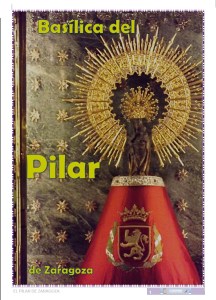
 Una visita al templo que más peregrinaciones marianas tiene, y el más representativo de la ciudad, en la céntrica plaza de las Catedrales, junto a las murallas romanas y el río Ebro, donde la Virgen se le apareció al apóstol Santiago.
Encontraras las siguientes visitas:
- En 1670 se inicia la basílica barroca, por Juan José de Austria Virrey de Aragón. Consta de tres naves, siendo la central mucho más ancha y con siete tramos, con capillas en sus cuatro lados. En los laterales centrales se encuentra el museo pilarista y en lado opuesto la sacristía Mayor.
- Entre la sacristía y el camarín de la Virgen, se encuentran las cúpulas pintadas por Goya, Regina Martiryum.
- Capilla de la Virgen. Esta capilla realizada por diseño de Ventura Rodríguez, pero ejecutada por José Ramírez de Arellano entre 1750 y 1765. La imagen de la Virgen es una talla de madera de 38 cms, sobre el pilar forrado por bronce y plata y cubierta con un manto.
- Frente a la capilla está el “coreto”, y en su cúpula es pintada por Goya entre mayo y primeros de junio de 1772. La adoración del Nombre de Dios.
- Nos acercamos a la nave central donde está el coro y el retablo Mayor. Altar Mayor con su retablo efectuado por Damián Forment entre 1509 y 1518 en alabastro policromado, en estilo gótico final, perteneciente al anterior templo. También del anterior templo es la sillería del coro renacentista y el pie del órgano. Y la reja del coro manierista efectuada entre 1573 y 1578.
- Continuamos la visita, en la parte anterior de la capilla y el “coreto” se encuentran las bombas… del bombardeo que la basílica tuvo por la aviación republicana la del 3 de agosto de 1936, y que estas dos que entraron en el templo junto con una tercera que se incrusto en la plaza y que tampoco exploto. En esta parte inferior en el subsuelo se encuentra la cripta.
- Y a los pies del templo se encuentra la capilla del baptisterio situada en la nave de la Epístola junto a la puerta en el retablo hay dos cuados que se le atribuyen a Goya
Puedes descargarte el PDF.
Pulsar sobre la imagen con el botón derecho y guardar como…para descargar y llevar el archivo PDF en tu Tablet o Smartphone toda la información con planos, puntos interesantes a visitar, fotos, contactos, etc. Si te ha parecido interesante y quieres conocer las nuevas publicaciones, solo tienes incluirte en “seguir” para recibirlas por correo electrónico, cada nueva publicación.
-
CATHEDRAL BASILICA OF OUR LADY OF THE PILLAR OF ZARAGOZA
A visit to the temple with the most Marian pilgrimages, and the most representative of the city, in the central Plaza de las Catedrales (Cathedral Square), next to the Roman walls and the Ebro River, where the Virgin Mary appeared to the Apostle James.
You will find the following attractions:
- Construction of the Baroque basilica began in 1670, commissioned by Juan José de Austria, Viceroy of Aragon. It consists of three naves, the central one being much wider and with seven bays, with chapels on all four sides. The Pilar Museum is located on the central side aisles, and the main sacristy is on the opposite side.
- Between the sacristy and the Virgin’s dressing room are the domes painted by Goya, Regina Martiryum.
- Chapel of the Virgin. This chapel was designed by Ventura Rodríguez but executed by José Ramírez de Arellano between 1750 and 1765. The image of the Virgin is a 38 cm wooden carving, mounted on a pillar covered with bronze and silver and draped with a mantle.
- Opposite the chapel is the choir loft, whose dome bears Goya’s painting «The Adoration of the Name of God,» created between May and early June of 1772.
- We approach the central nave where the choir and the main altarpiece are located. The main altar, with its altarpiece made by Damián Forment between 1509 and 1518 in polychrome alabaster, is in the late Gothic style and belonged to the previous church. The Renaissance choir stalls and the organ base also date from the previous church. And the Mannerist choir screen, made between 1573 and 1578.
- We continue the visit. In the front part of the chapel and the choir loft are the bombs… from the bombing of the basilica by the Republican air force on August 3, 1936. These two entered the church, along with a third that lodged in the square and also failed to explode. The crypt is located in this lower area, in the basement.
- And at the foot of the church is the baptistery chapel, located in the Epistle aisle next to the door. On the altarpiece are two paintings attributed to Goya.
You can download the PDF.
Right-click on the image and select «Save as…» to download the PDF file to your tablet or smartphone. It contains all the information, including plans, points of interest to visit, photos, contacts, etc. If you found this interesting and want to know about new posts, just subscribe to «follow» to receive each new post by email.
-
CATHÉDRALE-BASILIQUE NOTRE-DAME DU PILIER DE SARAGOSE
Visitez le temple le plus fréquenté par les pèlerins mariaux et le plus emblématique de la ville. Situé sur la Plaza de las Catedrales (Place des Cathédrales), à proximité des remparts romains et de l’Èbre, lieu d’apparition de la Vierge Marie à l’apôtre Jacques, il vous permettra de découvrir les sites suivants :
- La construction de cette basilique baroque débuta en 1670, à la demande de Juan José de Austria, vice-roi d’Aragon. Elle se compose de trois nefs, la nef centrale, beaucoup plus large, comptant sept travées et flanquée de chapelles sur ses quatre côtés. Le musée du Pilier occupe les bas-côtés centraux, tandis que la sacristie principale se trouve de l’autre côté.
- Entre la sacristie et le vestibule de la Vierge se dressent les coupoles peintes par Goya, le Regina Martiryum.
- Chapelle de la Vierge. Cette chapelle fut conçue par Ventura Rodríguez mais réalisée par José Ramírez de Arellano entre 1750 et 1765. L’image de la Vierge est une sculpture en bois de 38 cm, montée sur un pilier recouvert de bronze et d’argent et drapé d’un manteau.
- En face de la chapelle se trouve la tribune, dont la coupole est ornée du tableau de Goya « L’Adoration du Nom de Dieu », peint entre mai et début juin 1772.
- Nous nous dirigeons vers la nef centrale où se trouvent le chœur et le retable principal. Ce dernier, avec son retable en albâtre polychrome réalisé par Damián Forment entre 1509 et 1518, est de style gothique tardif et appartenait à l’ancienne église. Les stalles du chœur, de style Renaissance, et le socle de l’orgue datent également de cette ancienne église. Le jubé, de style maniériste, date quant à lui de la période 1573-1578.
- La visite se poursuit. Dans la partie avant de la chapelle et la tribune du chœur se trouvent les bombes… vestiges du bombardement de la basilique par l’aviation républicaine le 3 août 1936. Deux d’entre elles ont pénétré dans l’église, ainsi qu’une troisième qui s’est logée sur la place sans exploser. La crypte se situe dans cette partie inférieure, au sous-sol.
- Au pied de l’église se trouve la chapelle du baptistère, située dans le bas-côté de l’Épître, près de la porte. Le retable est orné de deux tableaux attribués à Goya.
Vous pouvez télécharger le PDF.
Faites un clic droit sur l’image et sélectionnez « Enregistrer sous… » pour télécharger le fichier PDF sur votre tablette ou votre smartphone. Il contient toutes les informations, y compris les plans, les points d’intérêt à visiter, des photos, des contacts, etc. Si cela vous a intéressé et que vous souhaitez être informé des nouvelles publications, abonnez-vous pour recevoir chaque nouvel article par e-mail.
-
Kathedralbasilika Unserer Lieben Frau von der Säule von Saragossa
Besuchen Sie die Basilika mit den meisten Marienwallfahrten und das repräsentativste Wahrzeichen der Stadt. Sie befindet sich auf der zentralen Plaza de las Catedrales (Domplatz), direkt neben der römischen Stadtmauer und dem Ebro, wo die Jungfrau Maria dem Apostel Jakobus erschien.
Folgende Sehenswürdigkeiten erwarten Sie:
- Der Bau der barocken Basilika begann 1670 im Auftrag von Juan José de Austria, Vizekönig von Aragon. Sie besteht aus drei Schiffen, wobei das Mittelschiff deutlich breiter ist und sieben Joche aufweist. An allen vier Seiten befinden sich Kapellen. Das Pilar-Museum ist in den mittleren Seitenschiffen untergebracht, die Hauptsakristei gegenüber.
- Zwischen der Sakristei und dem Ankleidezimmer der Jungfrau Maria befinden sich die von Goya bemalten Kuppeln, das Gemälde „Regina Martyrium“.
- Marienkapelle Diese Kapelle wurde von Ventura Rodríguez entworfen, aber zwischen 1750 und 1765 von José Ramírez de Arellano erbaut. Das Marienbildnis ist eine 38 cm große Holzschnitzerei, die auf einer mit Bronze und Silber verkleideten Säule angebracht und mit einem Mantel bedeckt ist.
- Gegenüber der Kapelle befindet sich die Empore, deren Kuppel Goyas Gemälde „Die Anbetung des Namens Gottes“ trägt, das zwischen Mai und Anfang Juni 1772 entstand.
- Wir nähern uns dem Mittelschiff, in dem sich der Chor und der Hauptaltar befinden. Der Hauptaltar mit seinem Altarbild aus polychromem Alabaster, das zwischen 1509 und 1518 von Damián Forment geschaffen wurde, ist im spätgotischen Stil gehalten und gehörte zur Vorgängerkirche. Auch das Renaissance-Chorgestühl und der Orgelsockel stammen aus der Vorgängerkirche. Ebenso wie die manieristische Chorschranke, die zwischen 1573 und 1578 entstand.
- Wir setzen unseren Besuch fort. Im vorderen Teil der Kapelle und auf der Empore befinden sich die Bomben des Angriffs der republikanischen Luftwaffe auf die Basilika am 3. August 1936. Zwei dieser Bomben drangen in die Kirche ein, eine dritte blieb auf dem Platz liegen und explodierte ebenfalls nicht. Die Krypta befindet sich in diesem unteren Bereich, im Kellergeschoss.
- Am Fuße der Kirche liegt die Baptisteriumskapelle im Epistelschiff neben dem Eingang. Auf dem Altarbild befinden sich zwei Gemälde, die Goya zugeschrieben werden.
Sie können die PDF-Datei herunterladen.
Klicken Sie mit der rechten Maustaste auf das Bild und wählen Sie „Speichern unter…“, um die PDF-Datei auf Ihr Tablet oder Smartphone herunterzuladen. Sie enthält alle Informationen, darunter Pläne, Sehenswürdigkeiten, Fotos, Kontaktdaten usw. Wenn Sie diesen Beitrag interessant fanden und über neue Beiträge informiert werden möchten, abonnieren Sie einfach die „Folgen“-Funktion, um jeden neuen Beitrag per E-Mail zu erhalten.
 Salidas