
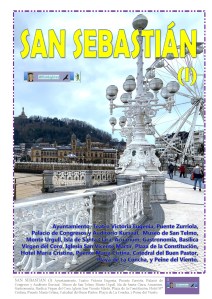
 Este es un recorrido para un día de la parte viaja y las playas de la ciudad.
Encontraras las siguientes visitas:
- Recorrer la Parte Vieja, con templos de la Basílica de Nuestra Señora del Coro, templo de estilo barroco integrante del Camino de Santiago por la Costa, la iglesia de San Vicente Mártir, la mas antigua de la ciudad es de estilo gótico del S. XV.
- El Museo de San Telmo, Museo de Historia y Etnografía Vasca de titularidad municipal.
- Recorrer el paseo Nuevo hasta la escultura de Jorge Oteiza (Construcción Vacía), en este punto poder observar la bahía de La Concha, con la Isla de Santa Clara, etc.
- El Aquarium. Reconocido como uno de los mejores del mundo, contiene más de 200 especies y un túnel de 360º que lo atraviesa.
- Aprovechar en esta zona para degustar su Gastronomía.
- El Ayuntamiento nuevo, trasladarnos al Teatro María Eugenia, salir a la ribera del Urumea con su Puente Zurriola y acercarnos al Palacio de Congresos y Auditorio Kursaal.
- Seguir por la ribera del Urumea con el Hotel María Cristina, protagonizó la belle époque donostiarra y es el alojamiento principal de las estrellas que acuden al Festival Internacional de Cine de San Sebastián. Un poco mas abajo el Puente de María Cristina, construcción ecléctica.
- Catedral del Buen Pastor.- Su construcción tuvo lugar en los últimos años del siglo XIX en un estilo historicista neogótico.
- Por la calle Urbieta salimos al paseo marítimo en las proximidades del espacio abierto ante el Ayuntamiento y junto a la calle Miramar con la noria Gigante.
- Continuar por el paseo Mira Concha con la Playa de La Concha y su balneario La Perla. Tiene aproximadamente 1.350 metros de longitud y una anchura media de 40 metros, con arena fina y dorada y aguas generalmente tranquilas.
- Playa de Ondarreta.– La playa está conectada por un paseo marítimo que enlaza con la Playa de La Concha y llega hasta la icónica escultura «Peine del Viento» de Eduardo Chillida, un símbolo imperdible de San Sebastián
- Y las esculturas Peine de los Vientos.- Se trata de un conjunto de tres esculturas de acero corten, creadas por el escultor vasco Eduardo Chillida en 1977. Estas piezas metálicas están ancladas en rocas al borde del mar
Puedes descargarte el PDF.
Pulsar sobre la imagen con el botón derecho y guardar como…para descargar y llevar el archivo PDF en tu Tablet o Smartphone toda la información con planos, puntos interesantes a visitar, fotos, contactos, etc. Si te ha parecido interesante y quieres conocer las nuevas publicaciones, solo tienes incluirte en “seguir” para recibirlas por correo electrónico.
-
SAN SEBASTIAN (I) City Hall, Victoria Eugenia Theater, Zurriola Bridge, Kursaal Conference Center and Auditorium, San Telmo Museum, Monte Urgull, Santa Clara Island, Aquarium, Gastronomy, Basilica of Our Lady of the Choir, Church of San Vicente Mártir, Plaza de la Constitución, Hotel María Cristina, María Cistina Bridge, Buen Pastor Cathedral, La Concha Beach, and Peine del Viento.
This is a one-day tour of the city’s main streets and beaches.
You will find the following attractions:
- Tour the Old Town, with its churches: the Basilica of Our Lady of the Choir, a Baroque-style temple part of the Coastal Way of St. James, and the Church of San Vicente Mártir, the oldest church in the city, built in the 15th-century Gothic style.
- The San Telmo Museum, a municipal museum of Basque History and Ethnography.
- Walk along the Paseo Nuevo to the Jorge Oteiza sculpture (Empty Construction). From this point, you can admire La Concha Bay, including Santa Clara Island, etc.
- The Aquarium. Recognized as one of the best in the world, it houses more than 200 species and a 360-degree tunnel runs through it.
- Take advantage of this area to sample its cuisine.
- The new Town Hall, then move on to the María Eugenia Theater, then head out to the banks of the Urumea River with its Zurriola Bridge and visit the Kursaal Conference Center and Auditorium.
- Continue along the banks of the Urumea River to the Hotel María Cristina. It was a centerpiece of San Sebastián’s Belle Époque and is the main accommodation for stars attending the San Sebastián International Film Festival. A little further down is the María Cristina Bridge, an eclectic building.
- Buen Pastor Cathedral. It was built in the late 19th century in a neo-Gothic historicist style.
- Via Urbieta Street, we come out onto the seafront promenade near the open space in front of the Town Hall and next to Miramar Street with the Giant Ferris wheel.
- Continue along Mira Concha Promenade to La Concha Beach and its La Perla spa resort. It is approximately 1,350 meters long and 40 meters wide, with fine golden sand and generally calm waters.
- Ondarreta Beach. – The beach is connected by a promenade that links to La Concha Beach and reaches the iconic «Peine del Viento» sculpture by Eduardo Chillida, a must-see symbol of San Sebastián.
- And the Peine de los Vientos sculptures. – This is a set of three Corten steel sculptures, created by Basque sculptor Eduardo Chillida in 1977. These metal pieces are anchored in rocks at the edge of the sea.
You can download the PDF.
Right-click on the image and save as… to download and save the PDF file to your tablet or smartphone with all the information, including maps, places of interest, photos, contacts, etc. If you found this interesting and would like to know about new posts, simply follow us to receive them by email.
-
SAINT-SÉBASTIEN (I) : Hôtel de Ville, Théâtre Victoria Eugenia, Pont de la Zurriola, Palais des Congrès et Auditorium Kursaal, Musée San Telmo, Mont Urgull, Île Santa Clara, Aquarium, Gastronomie, Basilique Notre-Dame du Chœur, Église San Vicente Mártir, Place de la Constitution, Hôtel María Cristina, Pont María Cistina, Cathédrale du Buen Pastor, Plage de la Concha et Peine del Viento.
Ce circuit d’une journée vous permettra de découvrir les principales rues et plages de la ville.
Vous y découvrirez les attractions suivantes :
- Visite de la vieille ville et de ses églises : la Basilique Notre-Dame du Chœur, temple baroque du Chemin de Saint-Jacques-de-Compostelle, et l’Église San Vicente Mártir, la plus ancienne église de la ville, construite dans le style gothique du XVe siècle.
- Le Musée San Telmo, musée municipal d’histoire et d’ethnographie basques.
- Promenez-vous le long du Paseo Nuevo jusqu’à la sculpture de Jorge Oteiza (Construction vide). De là, vous pourrez admirer la baie de La Concha, notamment l’île Santa Clara.
- L’Aquarium. Reconnu comme l’un des meilleurs au monde, il abrite plus de 200 espèces et est traversé par un tunnel à 360 degrés.
- Profitez de cet espace pour déguster sa gastronomie.
- Le nouvel hôtel de ville, puis le théâtre María Eugenia, puis les rives de l’Urumea et son pont Zurriola, et visitez le palais des congrès et auditorium Kursaal.
- Continuez le long des rives de l’Urumea jusqu’à l’hôtel María Cristina. Pièce maîtresse de la Belle Époque de Saint-Sébastien, il est le principal lieu d’hébergement des stars assistant au Festival international du film de Saint-Sébastien. Un peu plus loin se trouve le pont María Cristina, un bâtiment éclectique.
- Cathédrale du Buen Pastor. Elle a été construite à la fin du XIXe siècle dans un style historiciste néogothique.
- Par la rue Urbieta, on accède à la promenade du front de mer, près de l’espace ouvert devant l’hôtel de ville et à côté de la rue Miramar avec sa grande roue.
- Continuez sur la promenade Mira Concha jusqu’à la plage de La Concha et sa station thermale La Perla. Longue d’environ 1 350 mètres et large de 40 mètres, elle est dotée d’un sable fin et doré et d’eaux généralement calmes.
- Plage d’Ondarreta. – La plage est reliée par une promenade qui relie la plage de La Concha et mène à l’emblématique « Peine del Viento » d’Eduardo Chillida, un symbole incontournable de Saint-Sébastien.
- Et les sculptures du Peine de los Vientos. – Il s’agit d’un ensemble de trois sculptures en acier Corten, créées par le sculpteur basque Eduardo Chillida en 1977. Ces pièces métalliques sont ancrées dans des rochers au bord de la mer.
Vous pouvez télécharger le PDF.
Faites un clic droit sur l’image et enregistrez sous… pour télécharger et enregistrer le fichier PDF sur votre tablette ou smartphone avec toutes les informations, y compris les cartes, les lieux d’intérêt, les photos, les contacts, etc. Si vous avez trouvé cela intéressant et que vous souhaitez être informé des nouveaux articles, suivez-nous simplement pour les recevoir par e-mail.
-
SAN SEBASTIAN (I) Rathaus, Victoria Eugenia Theater, Zurriola-Brücke, Kursaal Konferenzzentrum und Auditorium, San Telmo Museum, Monte Urgull, Insel Santa Clara, Aquarium, Gastronomie, Basilika Unserer Lieben Frau vom Chor, Kirche San Vicente Mártir, Plaza de la Constitución, Hotel María Cristina, María Cistina-Brücke, Kathedrale Buen Pastor, Strand La Concha und Peine del Viento.
Dies ist eine eintägige Tour durch die wichtigsten Straßen und Strände der Stadt.
Sie finden folgende Sehenswürdigkeiten:
- Besichtigen Sie die Altstadt mit ihren Kirchen: der Basilika Unserer Lieben Frau vom Chor, einem barocken Tempel, der Teil des Küstenwegs nach Santiago ist, und der Kirche San Vicente Mártir, der ältesten Kirche der Stadt, erbaut im gotischen Stil des 15. Jahrhunderts.
- Das San Telmo Museum, ein städtisches Museum für baskische Geschichte und Ethnographie.
- Spazieren Sie den Paseo Nuevo entlang zur Skulptur „Leere Konstruktion“ von Jorge Oteiza. Von hier aus können Sie die Bucht von La Concha, einschließlich der Insel Santa Clara usw. bewundern.
- Das Aquarium. Es gilt als eines der besten der Welt, beherbergt mehr als 200 Arten und wird von einem 360-Grad-Tunnel durchzogen.
- Nutzen Sie die Gelegenheit, die Gastronomie zu probieren.
- Das neue Rathaus, dann weiter zum María Eugenia Theater, dann weiter zum Ufer des Flusses Urumea mit seiner Zurriola-Brücke und besuchen Sie das Konferenzzentrum und Auditorium Kursaal.
- Gehen Sie weiter am Ufer des Flusses Urumea entlang zum Hotel María Cristina. Es war ein Herzstück der Belle Époque von San Sebastián und ist die Hauptunterkunft für Stars, die das Internationale Filmfestival von San Sebastián besuchen. Etwas weiter unten befindet sich die María Cristina-Brücke, ein eklektisches Gebäude.
- Kathedrale Buen Pastor. Es wurde im späten 19. Jahrhundert im neugotischen, historizistischen Stil erbaut.
- Über die Straße Urbieta gelangen wir auf die Strandpromenade in der Nähe des Platzes vor dem Rathaus und neben der Straße Miramar mit dem Riesenrad.
- Weiter geht es entlang der Promenade Mira Concha zum Strand La Concha und seinem Kurort La Perla. Er ist etwa 1.350 Meter lang und 40 Meter breit und besticht durch feinen, goldenen Sand und meist ruhiges Wasser.
- Strand Ondarreta: Der Strand ist durch eine Promenade mit dem Strand La Concha verbunden und führt zur ikonischen Skulptur „Peine del Viento“ von Eduardo Chillida, einem Wahrzeichen von San Sebastián, das man gesehen haben muss.
- Und die Skulpturen „Peine de los Vientos“. Diese drei Skulpturen aus Cortenstahl wurden 1977 vom baskischen Bildhauer Eduardo Chillida geschaffen. Diese Metallteile sind in Felsen am Meeresrand verankert.
Sie können das PDF herunterladen.
Klicken Sie mit der rechten Maustaste auf das Bild und wählen Sie „Speichern unter …“, um die PDF-Datei mit allen Informationen, einschließlich Karten, Sehenswürdigkeiten, Fotos, Kontakten usw., herunterzuladen und auf Ihrem Tablet oder Smartphone zu speichern. Wenn Sie das interessant fanden und über neue Beiträge informiert werden möchten, folgen Sie uns einfach, um sie per E-Mail zu erhalten.
 Salidas